
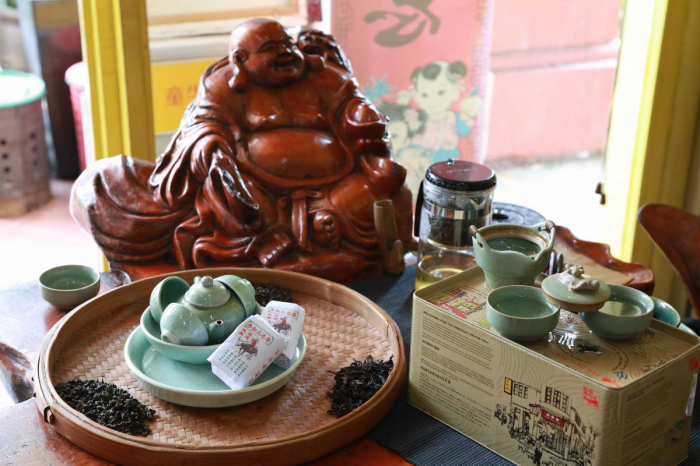
The tea ceremony Singapore celebrates represents far more than a ritualistic exchange of porcelain and leaves; it constitutes a profound meditation on memory, kinship, and the delicate architecture of human connection. In this vibrant city-state where tradition and modernity dance in perpetual dialogue, these ancient practices continue to pulse with life, carrying within their choreographed movements the encoded wisdom of generations.
The Biological Memory of Ritual
Like cellular memory encoded in our DNA, cultural practices embed themselves in the collective consciousness of communities. The Chinese wedding tea ceremony is “a significant tradition in Chinese weddings that is still commonly practised in Singapore”, demonstrating how ritualistic behaviours persist across generations not merely through conscious preservation, but through an almost genetic imperative to maintain cultural continuity.
The neurological basis of ritual suggests that repetitive, meaningful actions create neural pathways that reinforce social bonds and emotional regulation. When couples in Singapore engage in the ceremonial Singapore tea tradition, they activate ancient patterns of recognition and belonging that transcend individual consciousness, connecting them to a vast network of ancestral memory.
The Pharmacology of Respect: How Tea Transforms Relationships
In the lexicon of Chinese culture, tea functions as more than a beverage; it operates as a molecular messenger of respect and gratitude. The Chinese wedding tea ceremony, literally meaning ‘to respectfully offer tea’, is an integral part of traditional Chinese weddings, symbolising respect, gratitude, and the merging of two families. This transformation of a simple act into profound communication demonstrates the remarkable capacity of human societies to imbue everyday objects with extraordinary meaning.
The ceremony’s therapeutic effects extend beyond symbolism. The act of serving requires practitioners to:
- Assume positions of humility: Kneeling or bowing whilst serving tea activates physiological responses associated with submission and vulnerability
- Engage in focused attention: The precise movements required demand mindfulness, reducing cortisol levels and promoting emotional regulation
- Practice reciprocal exchange: The giving and receiving of gifts creates oxytocin release, strengthening familial bonds
The Singapore Adaptation: Evolution in Action
Cultural practices, like living organisms, demonstrate remarkable adaptability when subjected to environmental pressures. Singapore’s unique multicultural landscape has produced fascinating mutations in traditional tea ritual practices. “Modern adaptations of the Chinese customs are becoming increasingly common in Singapore”, yet the essential DNA of the tradition remains intact.
Contemporary Singapore couples navigate between respecting ancestral protocols and accommodating modern realities. Many now “choose to combine both sessions of the tea ceremony into one and hold it at a later time at their wedding venue to have more time to themselves in the morning”. This adaptation reflects the evolutionary principle that successful traits, in this case, cultural practices, survive by maintaining their essential function whilst modifying their expression.
The Molecular Composition of Ceremony
The specific elements comprising a Singapore Chinese tea ceremony operate like components in a complex biochemical reaction, each contributing to the overall therapeutic effect:
Traditional tea blends
Traditional tea blends incorporate ingredients chosen for their symbolic properties. “The tea is usually brewed with ingredients such as lotus seeds and red dates to bless the couple with many kids quickly”. These botanical additions serve dual purposes: creating distinctive flavours that trigger olfactory memories, and providing visual cues that reinforce the ceremony’s fertility symbolism.
The hierarchical serving order
The hierarchical serving order functions as a social pharmaceutical, carefully calibrated to reinforce family structures. “The order of serving tea is very important. It shows how the couple respect their seniority. The parents will be served first, then the grandparents, grand uncles and aunts, uncles and aunts, and then elder siblings”.
Attire and positioning
Attire and positioning create visual and kinesthetic anchors that distinguish ceremonial space from everyday reality. The traditional requirement that participants wear specific colours and adopt particular postures helps induce the psychological state necessary for meaningful ritual engagement.
The Pathology of Cultural Loss
What happens when communities abandon these practices? Medical anthropology suggests that the loss of meaningful rituals can contribute to what researchers term “cultural bereavement”, a form of collective grief that manifests in increased rates of depression, anxiety, and social disconnection.
The Therapeutic Mechanism of Collective Memory
“The tea ceremony is more than just drinking tea; it’s a ritual where the newlyweds express their appreciation and deference to their parents, grandparents, and other family elders”. This exchange creates what psychiatrists call “narrative coherence”, the sense that individual lives connect to larger stories that extend backwards and forwards through time.
The ceremony’s power lies not in its ability to change objective reality, but in its capacity to alter the subjective experience of participants. Through structured interaction, family members reaffirm their roles within a larger social organism, creating the psychological safety nets that support individual well-being.
The Future Metabolism of Tradition
As Singapore continues evolving, these ceremonial Singapore tea practices will undoubtedly continue adapting. “Modern tea ceremonies may be less formal but still retain the essence of the tradition, emphasising respect, hospitality, and an appreciation for the beauty of tea”.
The most successful adaptations will likely maintain three core elements: the creation of sacred time and space, the reinforcement of intergenerational bonds, and structured opportunities for expressing gratitude and respect. These elements appear to be the active ingredients in the ceremony’s effectiveness as social medicine.
Conclusion: The Prescription for Connection
In an era of increasing social fragmentation and digital disconnection, traditional practices like the tea ceremony offer something that cannot be replicated through technological innovation: the irreplaceable experience of being fully present with family across generational boundaries. The wisdom embedded in these rituals reflects thousands of years of human experimentation with techniques for creating and maintaining social cohesion.
The continued vitality of the tea ceremony Singapore traditions suggests that beneath our modern sophistication lies an ancient understanding: that some forms of medicine come not in pharmaceutical bottles, but in ceramic cups, served with reverence and received with gratitude.

